WELCEOM TO TAI'AN CITY RUIHENG BUILDING MATERIALS CO., LTD OFFICIAL WEBSITE
Language:  ∷
∷ 
∷  ∷
∷ Geomembranes are essential geosynthetic materials widely used in civil engineering, environmental protection, water conservancy, and agricultural projects, primarily serving as impermeable barriers to prevent the migration of liquids or gases. The thickness of a geomembrane is a critical factor that directly determines its mechanical strength, puncture resistance, durability, and suitability for specific application scenarios. Selecting an inappropriate thickness can lead to premature liner failure, leakage risks, or unnecessary cost increases. This article explores the common thicknesses of geomembranes and their corresponding application scenarios, providing practical guidance for project design and material selection.
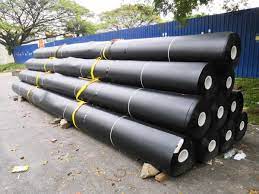
Aquaculture: Lining small-scale fish ponds, lotus ponds, and ornamental ponds. This thickness can effectively retain water while adapting to the irregular shapes of the ponds, and its flexibility allows for easy laying without damage during installation.
Horticulture and Agriculture: Soil impermeability for flower beds, small irrigation ditches, and temporary water storage facilities. It helps maintain soil moisture and prevent water waste, while its low cost makes it economical for large-area laying in agricultural projects.
Temporary Projects: Temporary waterproofing for construction sites, temporary storage pits, and short-term containment projects. Due to its low cost and easy handling, it is ideal for projects with short service life requirements.
Pond and Reservoir Lining: Commercial aquaculture ponds, medium-sized irrigation ponds, and small reservoirs (with water depth ≤ 1.5 m). This thickness can withstand moderate water pressure and soil friction, ensuring long-term water retention without leakage. For most professional aquaculture projects, 1.0 mm geomembranes are preferred for their optimal balance of cost and durability.
Road and Railway Engineering: Anti-seepage and isolation for road bases, subgrades, and railway embankments. It prevents water infiltration into the subgrade, avoiding softening and deformation, and improves the stability and service life of the project.
Landfill Secondary Liners: Secondary liners for small to medium-sized municipal solid waste landfills. They work with primary liners to form a double barrier, reducing the risk of leachate leakage. This thickness complies with basic landfill anti-seepage requirements and is cost-effective.
Landfill Primary Liners: Primary liners for large municipal solid waste landfills and hazardous waste landfills. They must withstand long-term exposure to leachate (which contains corrosive substances), high static and dynamic loads from waste, and ground settlement. 1.5 mm geomembranes are commonly used for secondary liners, while 2.0 mm geomembranes are preferred for primary liners and high-risk containment systems, complying with GRI-GM13 standards for long-term environmental safety.
Mining and Industrial Projects: Lining for heap leach pads, tailings ponds, and industrial wastewater treatment pools. In mining applications, this thickness can effectively contain toxic and harmful substances in tailings and leachate, preventing environmental pollution. For industrial wastewater pools, it resists corrosion from acidic and alkaline wastewater, ensuring long-term service life.
Water Conservancy Projects: Medium to large reservoirs (with water depth 1.5–3 m), canals, and dams. 1.5 mm geomembranes are widely used for medium-sized reservoirs due to their high cost-performance, while 2.0 mm geomembranes are suitable for large reservoirs (water depth ≥ 3 m) and industrial reservoirs with slightly corrosive water bodies, as they can withstand greater water pressure and potential puncture risks from uneven foundations.
Chemical Industry: Lining for large chemical plant storage tanks, chemical waste disposal sites, and acid-base storage ponds. This thickness can effectively resist long-term corrosion from strong acids, alkalis, and organic solvents, preventing chemical leakage and environmental contamination.
Large-Scale Infrastructure: High-load projects such as large-scale water conservancy dams, expressway subgrades, and high-risk mining waste piles. It can withstand the pressure of heavy machinery, soil compaction, and extreme weather conditions (such as severe cold and high temperature), ensuring the stability and safety of the project structure.
Special Environmental Projects: Containment systems for radioactive waste, hazardous chemical spills, and other high-risk scenarios. The ultra-thick structure provides a reliable barrier, minimizing the risk of leakage and protecting public health and the environment.
Project Requirements: Clarify the impermeability level, load conditions, and service life requirements. For example, hazardous waste landfills require thicker geomembranes than decorative ponds.
Environmental Conditions: Evaluate factors such as chemical exposure, temperature variations, UV radiation, and foundation conditions. Thicker geomembranes are recommended in harsh environments with strong corrosion or frequent temperature changes.
Installation and Cost: Thicker geomembranes are less flexible and require specialized installation equipment, increasing installation costs. Balance durability needs with project budget to avoid over-design or under-performance.
Industry Standards and Regulations: Comply with relevant standards such as GRI-GM13 and local regulations, which often specify minimum thickness requirements for specific applications (e.g., landfills, drinking water reservoirs).
COMPANY:TAI'AN CITY RUIHENG BUILDING MATERIALS CO., LTD
Contact:Nickle Nie
Tel:008615866038408
Phone:008615866038408
Email:nickle@rhgeos.com
Add:NO.3566 LONGQUAN ROAD,TAI'AN HI-TECH ZONE,SHANDONG PROVINCE,CHINA